
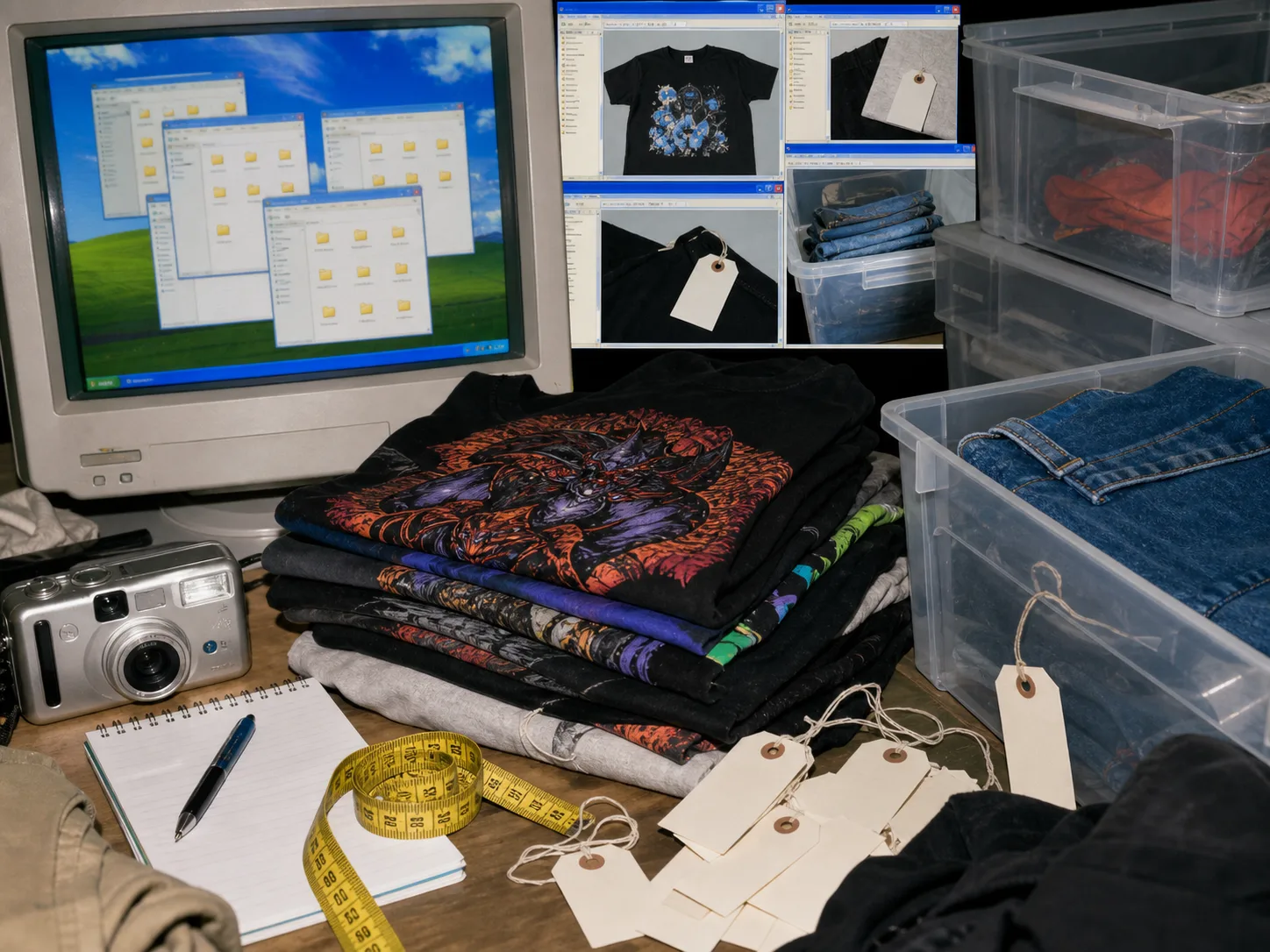
A good vintage reseller workflow has five parts: intake, photos, listing copy, pricing, and review. The trick is not finding one marketplace hack. It is making sure inventory does not rot in bins, titles stay searchable, photos stay consistent, and stale items get fixed before they disappear into the floor pile. Vinted, Poshmark and Depop all punish chaos in different ways.
Intake is where future pain starts
Every item needs a basic record before it becomes a listing: category, size, condition, measurements if needed, source cost, and any flaw that will matter later.
If you skip this step, you pay for it when a buyer asks a question and the item is buried somewhere behind a printer cable and three sweaters.
Batch photos, but do not batch blindness
Batching saves time. It also creates mistakes when you stop seeing the garment. Keep a simple shot list and check every item before moving on.
For vintage, prove the thing instead of asking the buyer to trust you: tag, fabric, print, stitching, flaws, and measurements when sizing is suspicious.
- Cover photo: shape and color.
- Detail photo: label or brand.
- Proof photo: fabric, tag, or condition.
- Flaw photo: anything the buyer should know.
Titles should not be poetry
A title is a search tool. Put the useful words first: brand, garment type, size, material, era, fit, and one style term. Save the cute language for the description if you must.
A title like 'perfect little find' deserves to be thrown into the sea. A title like 'Vintage Levi's 550 relaxed jeans size 32x30 light wash' works.
Repost with a reason
Reposting stale items can help, but only if you use it as a review trigger. Before reposting, ask whether the photo, price, title, or category was the real problem.
VintHelper fits here because Dressing+ can scan the wardrobe, back up listings, help with reposting, and keep seller work in one place instead of across nine tabs and a half-remembered spreadsheet.
FAQ
How should vintage resellers organize inventory?
Use a simple record for each item: SKU or bin, size, condition, cost, photos taken, listing status and marketplace.
How often should resellers repost stale listings?
Review stale listings weekly or biweekly, but fix weak photos, title or price before reposting.
What is the most important reseller workflow habit?
Consistent intake. If item data is messy at the start, every later task becomes slower.