
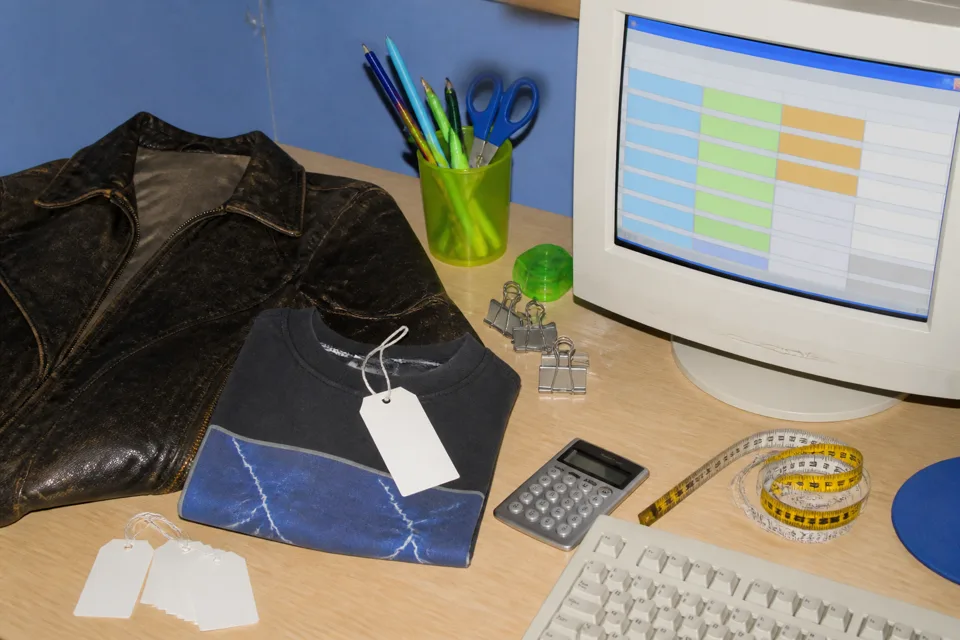
Price vintage on Vinted by working from the actual garment outward, not from the highest number you found in a late-night search. Start with brand, fabric, condition, measurements, era, and whether the piece has a buyer who can recognize it without being educated into it. Then look at comparable items, but separate asking prices from sales and separate truly similar pieces from things that merely share a decade. Finally, remember that the buyer sees shipping and Buyer Protection at checkout. A fair $28 vintage shirt can still feel expensive if the listing gives them no reason to trust it.
- Price the garment you have, not the fantasy version of it with a better tag and no flaws.
- Use comps as a range, then adjust for condition, measurements, urgency, and the buyer's checkout total.
- Leave a little room for an offer when the item invites negotiation; do not turn every listing into a garage-sale sign.
Build a range from the actual garment
Start with brand, fabric, fit, measurements, condition and the details that make the piece desirable. Compare five to ten genuinely similar items and distinguish asking prices from completed sales when that information is available.
A different size, a repaired seam or a much stronger graphic can change the comparison. Do not let the highest unsold asking price in a search become your entire pricing method.
Work backward from the offer you can accept
Example A: purchase or recorded item cost $8, packing $1, planned sale $25. The remainder before other costs is $16. A 10% accepted discount changes the sale to $22.50 and that remainder to $13.50.
Example B: cost $20, packing $1, planned sale $35. Before other costs, the remainder is $14. Accepting 20% off means a $28 sale and only $7 left. A discount that looks small on a button has halved that remainder.
| Illustrative item | Sale after discount | Item cost + packing | Remainder before other costs |
|---|---|---|---|
| $25 ask, no discount | $25.00 | $9.00 | $16.00 |
| $25 ask, 10% off | $22.50 | $9.00 | $13.50 |
| $35 ask, no discount | $35.00 | $21.00 | $14.00 |
| $35 ask, 20% off | $28.00 | $21.00 | $7.00 |
Give individual items individual limits
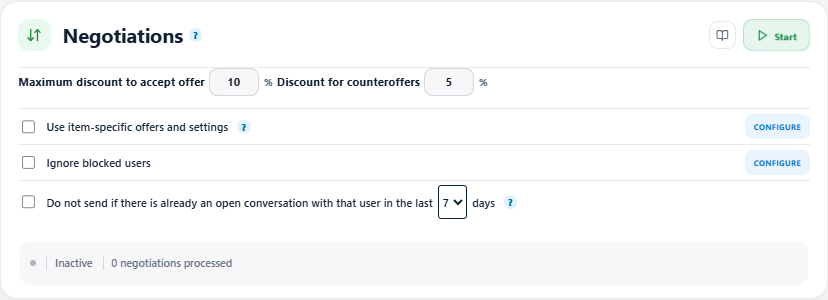
A general 10% offer is convenient, but an expensive purchase and a closet-clearout item may need different minimums. VintHelper can use item-specific offers and negotiation settings where enabled, so the particular item's rule takes priority.
For incoming negotiations, set the acceptance threshold and counteroffer separately. A counteroffer is the price you propose back; it is not the maximum reduction you have agreed to accept.
Look at the buyer's checkout total too
Vinted US describes selling as free, but the buyer still sees shipping and Buyer Protection. A low-priced single item can become less attractive once those costs are included. A useful bundle may make more sense than repeatedly cutting each item's price.
The same price does not necessarily produce the same net outcome on another marketplace. Use that marketplace's actual fee base and include any shipping discount you fund.
Change a price for a reason
No interest: inspect cover, category and title as well as price. Interest but repeated fit questions: add measurements. Offers below your floor: compare the market again and decide whether to hold, adjust or use a different suitable channel.
Keep the asking price, accepted offer and actual received amount separate in your record. Inventory value at asking prices is neither received revenue nor profit.
FAQ
How much should I price vintage clothes on Vinted?
Use a range based on truly comparable pieces, then adjust for condition, measurements, fabric, desirability, and the buyer's final checkout cost. There is no useful universal vintage markup.
Should I price higher on Vinted to allow offers?
Leave modest room when an item is likely to invite negotiation, but do not make the initial price so optimistic that buyers never favorite it. The listing should still feel credible before an offer exists.
Why do my Vinted favorites not turn into sales?
The price may be near the buyer's limit, or the listing may leave a doubt about size, condition, or the final total. Review those before cutting the price again.