

For US clothing resellers, Vinted is the marketplace I would test now, not because it magically beats Poshmark or Depop, but because the US version is still early enough to learn. Poshmark has trained buyers, offers and closet culture. Depop still wins when the item has a look. Vinted is interesting when you have clean inventory, decent photos, sane pricing, and the patience to watch what buyers favorite before the feed gets crowded.
Choose the marketplace by the selling job
Vinted suits a personal closet when the garment is clear, the price makes sense and you want fewer seller-side deductions. Poshmark has an established closet-and-offer routine. Depop can suit clothing whose styling or aesthetic is part of the buying decision.
For US professional reselling, first check whether the platform permits the activity. Vinted US currently lacks Pro, so a sourcing business should not treat the standard personal account as a substitute.
| Your priority | Vinted US | Poshmark | Depop US |
|---|---|---|---|
| Seller deductions | No selling fee under US guidance | $2.95 below $15; 20% from $15 | No selling fee; payment processing applies |
| Presenting the garment | Clear item, fit, condition and value | Recognizable stock and closet browsing | Strong visual identity plus garment proof |
| Follow-up work | Favorite notifications, messages and offers | Likes, offers and bundles | Messages, offers and style questions |
| Activity to check | Personal selling; no current US Pro | Rules for your account and inventory | Rules for your account and inventory |
A $25 item: compare the same transaction
Use a $25 item price before other costs. On Poshmark, a 20% seller commission leaves $20 before any seller-funded extras. Vinted's US selling guidance describes no selling fee, so the item payout starts at $25 before your own costs.
For Depop, payment processing uses a broader base that includes applicable shipping and taxes. If that full processing base were exactly $25, 3.3% plus $0.45 would be about $1.28. Use the actual transaction base for your listing; a boosted sale can add an optional fee. These are examples, not final profit figures.
Set up the Vinted routine once
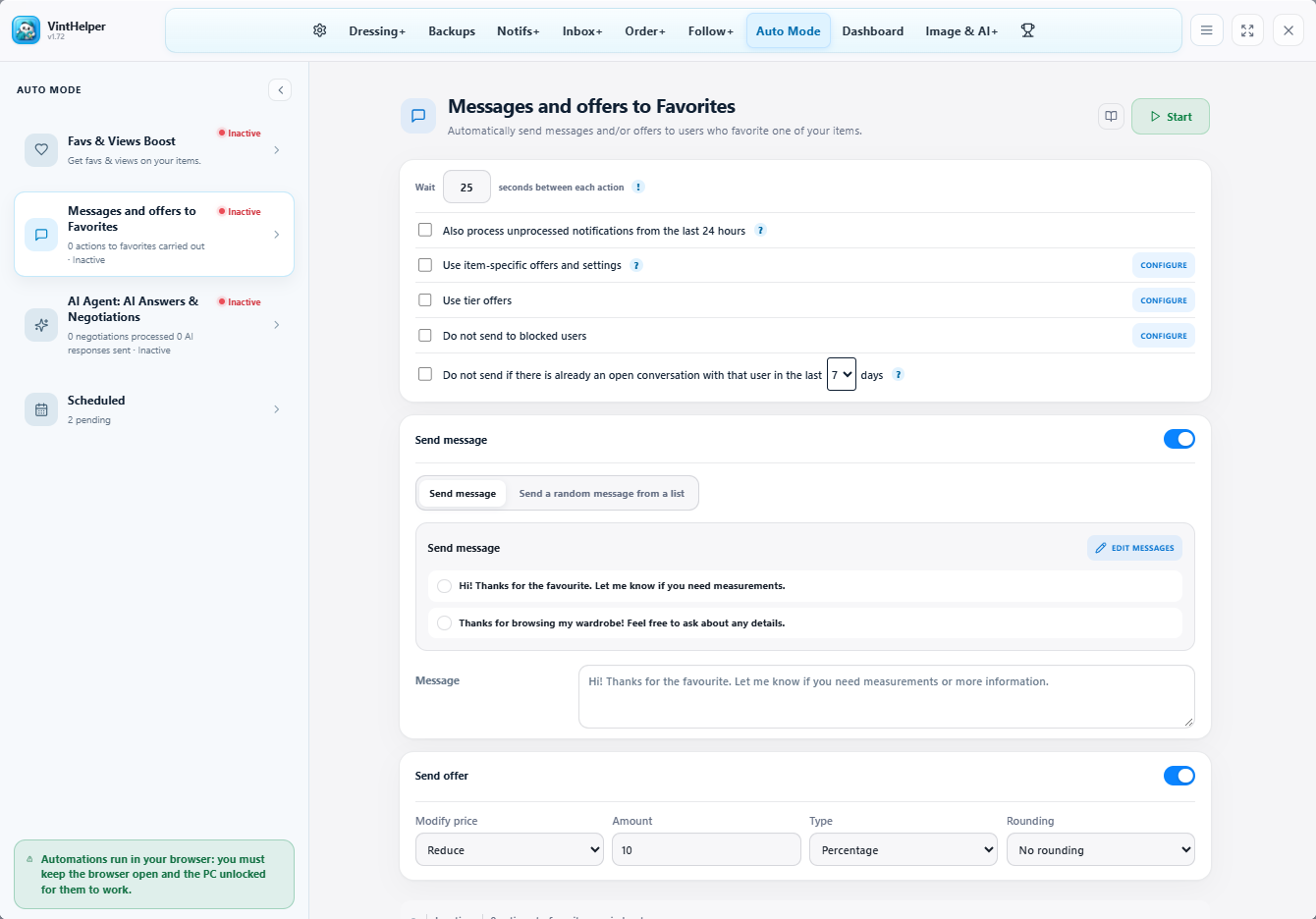
A good listing brings the buyer in. The repeat work comes next: saving the item record, reviewing favorite notifications, preparing a relevant offer and finding the sold garment for its label.
VintHelper joins those Vinted tasks in one workspace. Dressing+ handles listing work, Notifs+ turns selected favorites into actions and Order+ organizes the order stage. The product demonstration below shows the offer settings rather than asking you to take a feature list on faith.
Run a comparison you can learn from
Choose comparable personal items and the platforms suitable for your activity. Keep photo quality, measurements, price band and response effort consistent. Record net payout and time spent as well as sale count.
If an item is offered in more than one place, remove its other listings as soon as it sells. VintHelper does not cross-list or synchronize the other marketplaces for you.
FAQ
Is Vinted better than Poshmark for US sellers?
Not for every seller. Vinted is the one to test if you have clean wardrobe inventory and want early US-market data; Poshmark still has buyers trained to browse closets and make offers.
Is Vinted better than Depop for vintage clothes?
Depop can still win when the item sells on taste first. Vinted may be better for basics, wearable vintage, closet cleanouts, and items where the buyer wants the thing more than the performance around it.
Should resellers list on all three marketplaces?
Only if they can track inventory carefully. Duplicate selling risk and manual updates can become expensive fast.